
How should it feel to get around Atlanta in the years ahead? Where does the city need safer crossings, better connections, improved streets, or more transportation choices? How should Atlanta decide which transportation projects come next?
Those are some of the questions at the center of Atlanta’s Comprehensive Transportation Plan (CTP), a citywide planning effort led by the Atlanta Department of Transportation (ATLDOT).
The CTP will guide transportation planning and investment in Atlanta in both the near and long term. Rather than keying on just one way of getting around, the plan considers the entire transportation network and the people who use it, including those who drive, walk, bike, take transit, and use other modes of travel. These efforts are focused on creating a transportation system that is safe, accessible, and efficient. And Atlantans have an important role in shaping it.
What is the Comprehensive Transportation Plan?
Think of the CTP as a roadmap for the future of transportation in Atlanta. The plan will help ATLDOT identify transportation needs across the city. It will establish priorities and develop strategies, policies, and projects to address them. It builds upon years of transportation planning already completed in Atlanta and revisiting community-supported projects from previous plans while creating an opportunity to identify new ones.
The CTP is significant because it is ATLDOT’s first Comprehensive Transportation Plan since the department was established. The work supports several major City transportation objectives, including achieving Vision Zero by 2040.
The guiding idea is simple: Safer Streets. More Choices.
That means putting safety and access first while creating a transportation network that better serves Atlanta’s different neighborhoods and ways of traveling.
What Will the CTP Cover
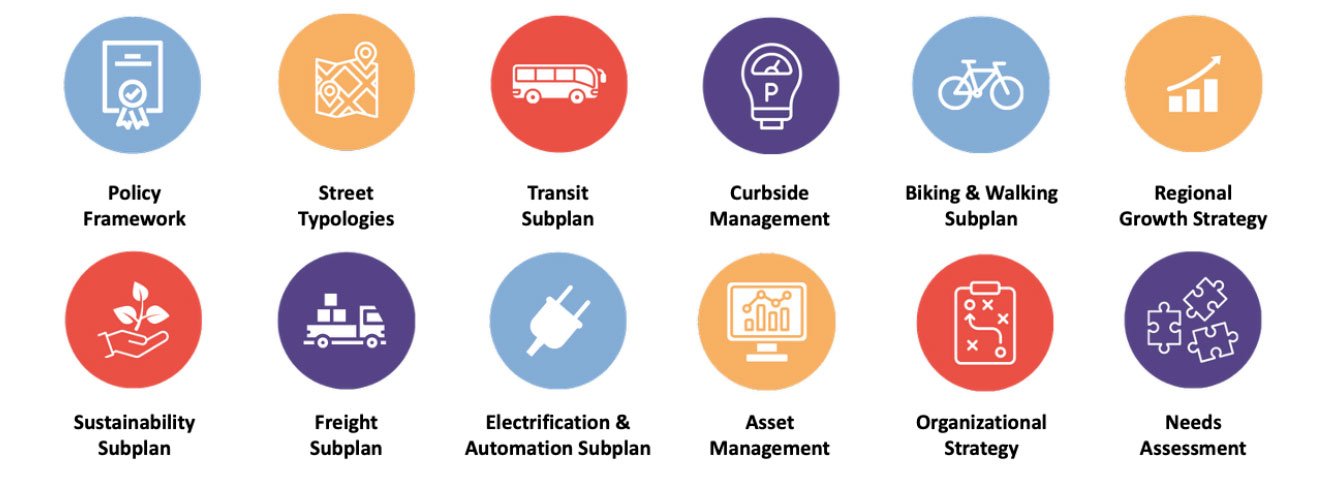
Transportation planning involves much more than deciding which roads should be repaved. The CTP will look at the policies, infrastructure, and long-term investments necessary to move Atlanta forward. The plan will also identify implementation strategies and partnerships needed to turn recommendations into projects.
There are some things the CTP is not intended to address— filling a pothole, replacing a damaged sign, interstate or highway improvements, or new transit expansion projects such as new rail lines or bus routes. Continue to submit routine maintenance requests through ATL311 and look to MARTA for transit planning.
Your Experience Is Part of the Plan
Data can tell us a lot about Atlanta’s transportation network. But it can’t tell us everything. Someone who walks to a MARTA stop every morning may notice something different from a parent driving a child to school. A person biking through a neighborhood may experience a street differently from someone making deliveries there. Residents know where crossing a street feels difficult and where transportation works well today.
That’s why public engagement is a major part of the CTP. ATLDOT will host various engagement opportunities to gather resident input.
There are some things the CTP is not intended to address— filling a pothole, replacing a damaged sign, interstate or highway improvements, or new transit expansion projects such as new rail lines or bus routes. Continue to submit routine maintenance requests through ATL311 and look to MARTA for transit planning.
From Listening to Action
The process of developing the CTP moves through stages so that community feedback can help shape the plan. The City is currently in the “Listening” phase, asking Atlantans to identify transportation challenges, opportunities and priorities, and gathering ideas that can be considered.
The process then moves into “Collaborating,” when project ideas are evaluated and prioritized in support of the City’s transportation vision. After that comes “Refining,” when the project list and implementation strategies are developed, including considerations such as scope, funding, and next steps. The overall CTP process begins September 2026 and spans throughout 2027, with plan adoption anticipated in December 2027.
Of special note, Atlanta’s existing transportation projects will not be put on hold while the new CTP is created. Current projects will continue as planned. The CTP will help identify what should come next as existing programs such as Renew Atlanta and Moving Atlanta Forward are completed.
What Happens to the Ideas Residents Submit?
During the planning process, community input will be combined with technical analysis and an evaluation framework to help identify and prioritize transportation needs and potential projects. Early ideas gathered from communities will move through the “Listening,” “Collaborating” and “Refining” phases before the final project list and implementation strategies are developed.
Submitting a project idea does not automatically mean that project will be built. Instead, your input becomes part of the information used to evaluate transportation priorities across Atlanta.
The result will be a plan designed not only to identify what Atlanta needs, but also to provide an achievable path for moving from transportation vision to project delivery.
Tell Us How Atlanta Should Move
You don’t need to be a transportation planner or engineer to participate. You just need to know how you experience Atlanta. Where do you have trouble crossing the street? Where would you like to walk or bike but don’t feel comfortable doing so? What would make your trip to work, school, MARTA, a park, or your neighborhood business easier? What transportation improvements would make a difference in your community?
The CTP’s online survey gives Atlantans an opportunity to share their travel experiences and ideas for improvements. Residents can also participate through public events and sign up for project updates.
Your everyday experience can help ATLDOT understand what Atlanta’s transportation network needs next.
Visit the Atlanta Comprehensive Transportation Plan website to learn more and share your valuable user experiences and interactions with our city’s transportation network.