
A Street Designed For Everyone
Completed in June 2022, the Martin Luther King Jr. Drive Complete Street project transformed one of Atlanta’s most important east-west corridors. The project connects neighborhoods to Downtown Atlanta while also providing access to MARTA rail stations, the Atlanta BeltLine, schools, universities, businesses, and other community destinations.
The redesign includes:
- New and improved pedestrian crossings
- Enhanced street lighting
- Painted and protected bike lanes
- Updated roadway configurations to improve safety and traffic flow
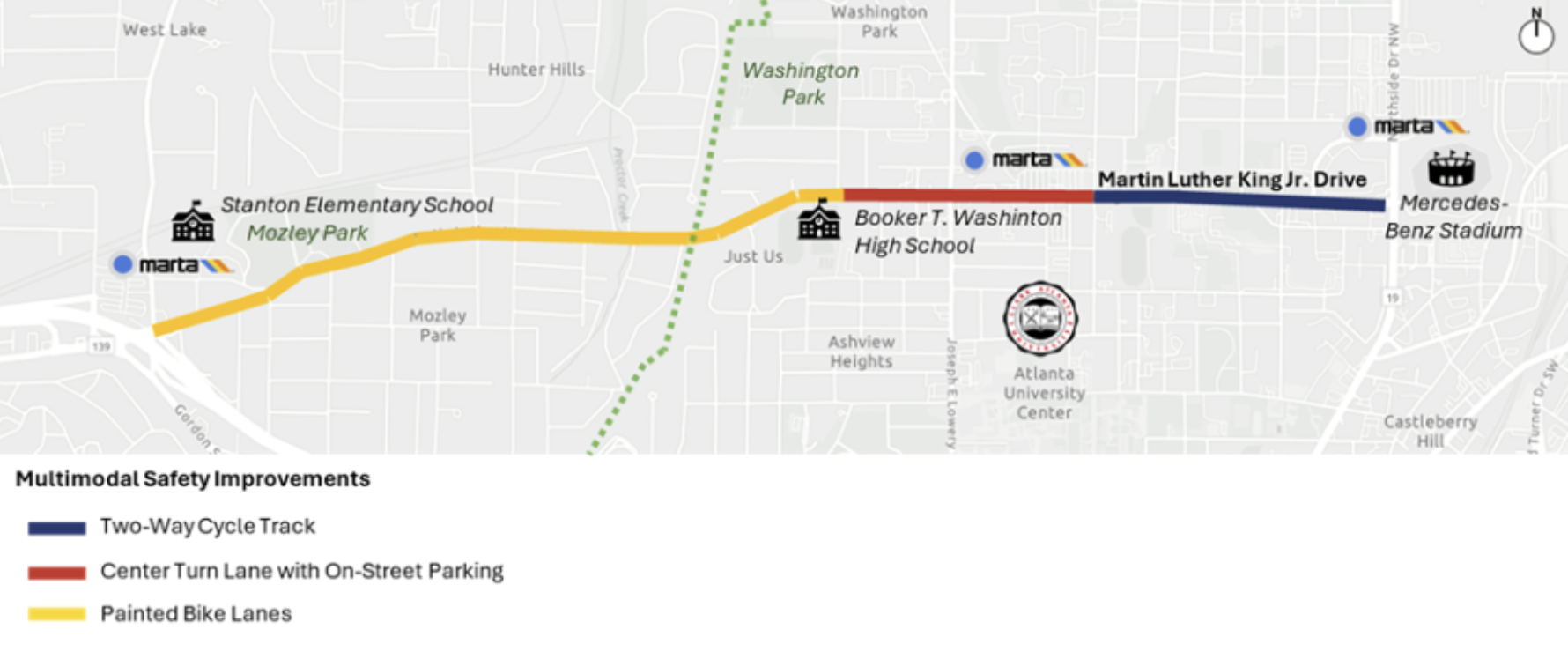
Northside Drive to James P. Brawley Drive (blue segment)

James P. Brawley Drive to Ollie Street (red segment)

Ollie Street to West Lake Avenue (yellow segment)

Safer Streets Are Saving Lives
The most significant outcome of the project has been improved safety. Since the corridor improvements were completed in June 2022, there have been no fatal accidents, compared to four fatal crashes in the first six months of 2018 prior to the start of project construction.
Other measurable results include:
- 23% reduction in all roadway crashes
- 56% reduction in pedestrian crashes
- 8% decrease in travel time during the busiest times of the day
The study also found a 46% reduction in head-on crashes, largely due to the installation of a center median that helps separate opposing traffic. These improvements represent meaningful progress toward Atlanta’s Vision Zero goal of eliminating vehicle-related fatalities by 2040.
Better Safety, Shorter Commutes
One common concern with roadway redesigns is whether they will slow traffic. Along Martin Luther King Jr. Drive, the data shows the opposite. After the improvements, travel times during peak periods decreased by approximately 30 seconds. Average vehicle speeds increased modestly while remaining below the posted 30 mph speed limit. The results demonstrate that thoughtfully designed streets can improve both safety and mobility at the same time.
Areas for Improvement
The evaluation also identified an increase in reported bicycle crashes after the project’s completion, possibly due to higher bicycle and shared e-scooter usage along the corridor. Further, all pedestrian and bicycle crashes occurring after construction were concentrated in a section of the corridor that does not include dedicated bicycle infrastructure.
ATLDOT will continue monitoring conditions along the corridor and use this data to guide future safety improvements where they are needed most.
Building a Safer Atlanta
Transportation projects should be measured by outcomes, not just construction milestones. The Martin Luther King Jr. Drive Complete Street project demonstrates how data-driven planning and thoughtful street design can create safer roads, improve access, and enhance the experience for everyone who travels through Atlanta.
As ATLDOT continues investing in safer streets across the city, projects like Martin Luther King Jr. Drive show what’s possible when transportation infrastructure is designed with every road user in mind.